
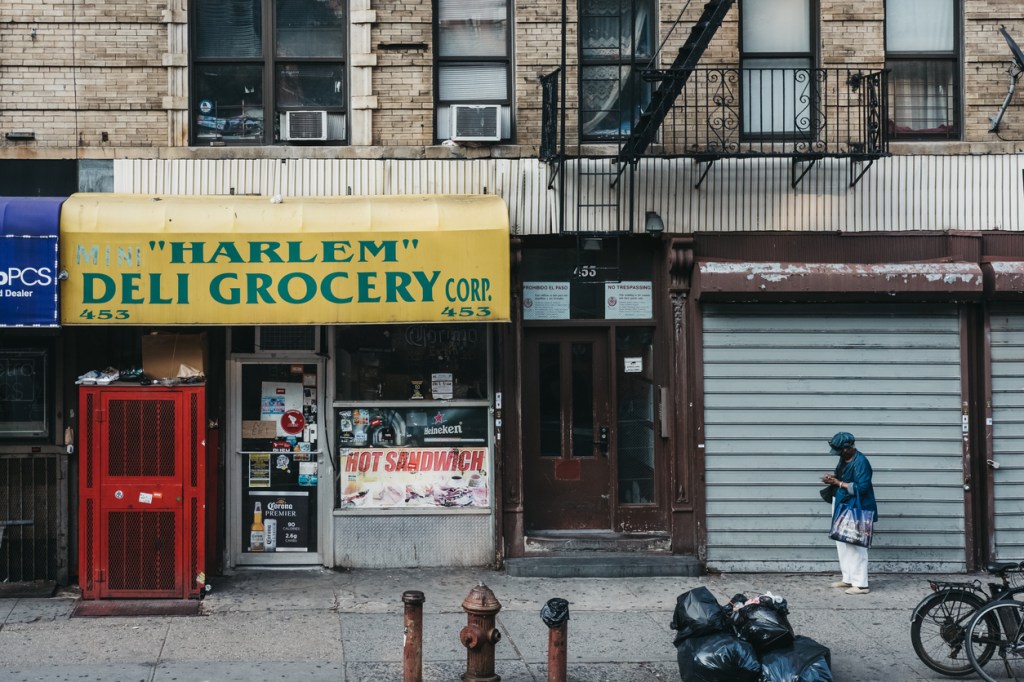
In 2017, an entrepreneur by the blog name Barefoot Bohemian decided to launch a Kickstarter campaign for La Gracia, a modern fruturía to be erected in the heart of San Diego’s predominantly Mexican-American Barrio Logan neighborhood. The idea sounded innocent, in theory: the Barefoot Bohemian wanted to bring healthy food into the neighborhood.
The problem?
By claiming she could improve the barrio by “introducing” healthy foods, the Barefoot Bohemian—a white, wealthy, self-described “chic nomad”—ignored the existence of countless locally-owned licuados, jugos, frutilocos, aguas frescas, chamangos, and other Mexican fruit specialties already provided by local establishments.
In Pascale Joassart-Marcelli’s The $16 Taco, Joassart-Marcelli details the story of this Barefoot Bohemian, who copied recipes from the Mexican vendors her business would displace and then pretended they were recipes of her own invention. Seeking to sell her fruit at a premium price, her prices would make health food inaccessible to many residents.
Barrio Logan residents viewed La Gracia as blatant cultural appropriation and, by extension, an attempt at furthering the gentrification of a neighborhood that had already suffered rising living costs for years. Activists spoke out extensively against the restaurant’s installation, and eventually the Barefoot Bohemian decided to abandon the La Gracia project altogether.
The story of La Gracia is not unique to the San Diego area—food gentrification is happening nationwide. For college students, food gentrification has put a strain on already limited student budgets.
In New York City, the addition of a Pressed Juicery restaurant to Columbia University’s campus in 2016 ignited mixed reactions from members of the student body, who felt the restaurant’s $6.50-per-bottle juices and $199 three-day-juice cleanses were more representative of the cold-pressed juice movement’s elitist status-signaling than the needs of local students.
Spoon University contributor Amanda Rykin noted the Pressed Juicery wasn’t the only restaurant raising the cost of healthy foods around Columbia’s campus—New England health food chain Sweetgreen also was the subject of student dissent when a location was added to the campus area in 2015.
On my own university campus, Miami University, there was an attempt to convert a beloved campus cafe into a Village Juice Company franchise location, a move that would have replaced $3.75 lattes with juices that cost over $10 a glass.
Just glancing at the company’s website, I could smell the spirit of gentrification. Instead of bringing affordable options on campus, the proposal would eliminate affordable food and replace it with a company that sells peanut butter toast for more than the typical student hourly wage.
I wrote an editorial, “Do Not Gentrify King Cafe,” which argued that the university community should keep its beloved cafe and not replace it with an expensive juice bar. The article was accompanied by a TikTok campaign in which I interviewed cafe locals, all of whom felt betrayed by the proposal.
My reporting contributed to the proposal being put on hold: a small victory in preserving local food traditions and keeping food more accessible.
From Barrio Logan to college towns, the cold-pressed juice industry has repeatedly been a signifier of gentrification. This raises a key question: what about cold-pressed juice makes it so appealing for wealthy and white audiences?
Colorado State University sociology professor Joshua Sbicca believes it is a matter of conspicuous consumption and status-signaling. According to Sbicca, by discovering (colonizing) authentic (ethnic) flavors and moving into up-and-coming (gentrifying) neighborhoods, white foodies gain respect and credibility from other white people for appearing more ‘cultured.’
This phenomenon is not only found in America; in Brixton, England, where local record stores have been yuppified with trendy juice bars and tapa bars, property values shot up over 45% from 2016 to 2018, making current rent prices unaffordable for longtime residents.
While health food restaurants like juiceries are oft-praised for bringing healthy foods into communities, they can have an adverse effect on the affordability and accessibility of health foods and drive customers away from locally-owned health food providers, some of which come from immigrant communities.
As a result of the superfood and health food trend, staples of cultures’ cuisine and common affordable ingredients such as sweet potatoes have surged in cost.
Beyond restaurants, elite grocery chains have contributed to the gentrification of neighborhoods. In what has been dubbed the “Whole Foods effect,” the addition of a Whole Foods grocery to a neighborhood is a signifier for wealthy, white consumers that a town is being restyled to accommodate them.
What happens as a result of foodies’ quest for validation and authenticity is that traditional, immigrant-owned restaurants can be replaced with expensive Asian Fusion cafes or upscale taco bars that promise cultured dining experiences at an exclusionary price.
Who bears the burden of these price hikes most are the individuals whose cultures created the flavors in the first place.
“I need to be in my feelings about #foodgentrification for a second. Because at this rate my kid won’t be able to afford soul food,” Black feminist writer Mikki Kendall tweeted in 2014, coining the term food gentrification and starting a nationwide conversation about how foodie health food trends have forced once-affordable ingredients out of affordability and cultural consumption.
Kendall continued, “Black Americans have been told relentlessly soul food was to blame for obesity. Now collards are the new kale #foodgentrification” In this tweet, she references a Whole Foods grocery campaign that proclaimed collard greens to be the “new kale,” a move that surged the cost of collard greens.
Food gentrification is an intersectional issue; it affects cultural preservation, affordability of local housing, displacement of marginalized communities, and overall economic well-being. Instead of prioritizing conspicuous consumption and status-signaling, people should strive to support businesses owned and operated by locals who created the flavors in the first place—not white hipsters who try to reinvent the agua fresca.
 miamipoliticalreview.org
Leave a comment