
Terius Madrigal
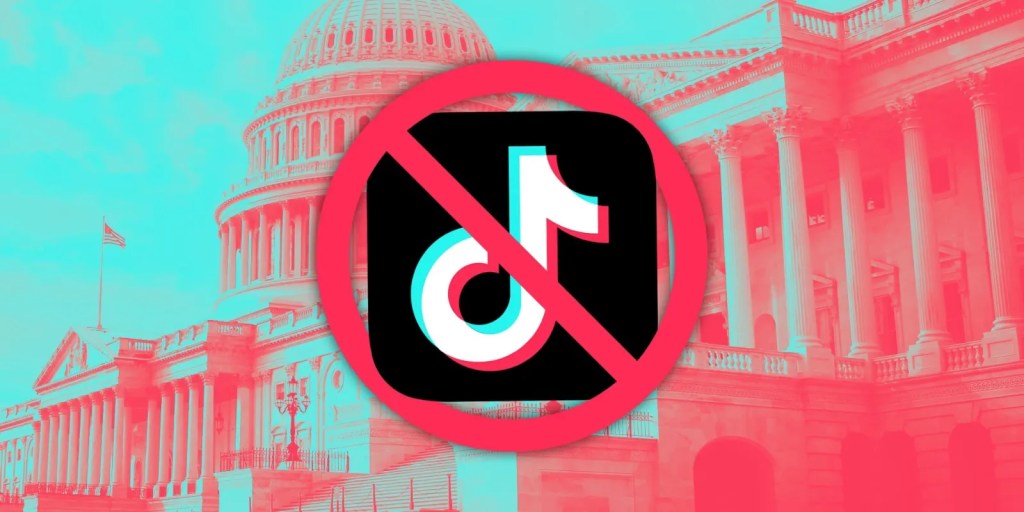
As you may have seen in the news recently, there is talk from Congress about banning Tiktok in the U.S. This arises from the privacy concerns over the data TikTok collects from users and who they sell it to. It is likely that a social uproar would arise from much of the youth if TikTok was banned.
Having interned for a tech lobbying group that worked on potential solutions to similar issues, I’m familiar with a simpler solution to the privacy aspect of this problem. It is called a Federal Online Privacy Standard, which would improve privacy concerns not just from users of Tiktok, but of all social media platforms.
According to AP News, “Both the FBI and officials at the Federal Communications Commission have warned that ByteDance could share TikTok user data — such as browsing history, location and biometric identifiers — with China’s authoritarian government.” Polling has shown that consumers’ largest issue of concern when using online services is protection of their data, and their data being observed by the Chinese government is far from ideal for users and U.S. international goals. In addition, users’ data on nearly all social media apps, not just TikTok, is sold to third parties ranging from other companies to outside parties playing the highest bidder. Some of this data is used to simply promote products and services a user may have interest in based on what they have viewed on said app.
However, the range of what data is given to third parties can get overly personal of one’s online habits. Sure, apps have you sign a user’s agreement to use the app in the first place, but in a modern world where usage of social media is nearly necessary to stay in the loop, understanding endless pages of legal jargon becomes hard to manage.
Various states currently have proposed or passed bills to deal with this privacy issue, raising unnecessary complexity and uncertainty for users as their online experience and rights differ based on their location. As states pass their own privacy laws, companies and online services may limit or remove new and existing features for all users, as complying with individual laws for every state becomes too difficult.
This hinders innovation and progress in the online marketplace and leaves consumers without a baseline level of privacy protection. For the sake of users’ privacy rights and future innovation, Congress should create a federal online privacy standard.
A congruent interstate standard will improve privacy online for most users and give companies clear guidance when devising improved or new features. In TikTok’s case it will allow the app to continue to operate in the U.S. so long as it complies with said standards. Beijing laws requiring companies to give certain data to China may be in conflict with US standards, but given the vast market for the app in the states, it will be a difficult decision for the company.
What a federal online privacy standard would look like.
The legislation should subject any online entity that collects, processes, or transfers linkable online data to the jurisdiction of the Federal Trade Commission (FTC) if violation occurs. Entities, unless responding to a judge-approved warrant or meeting-specific consent of the user in a concise manner, will be significantly restricted from transferring, processing, or collecting genetic information, specific geo-location, sensitive personal information, and government sensitive information. If not providing a specific service for one of the previous reasons, online entities must get the approval of users and show proof to FTC that any collection and transfer of data is for intended purposes only.
Online entities should not be able to condition a service or product usage by asking users to waive privacy rights in act. Rather, if service requires specific privacy information to function, the entity must secure explicit consent and may not ask for sensitive information outside function necessity.
Further, entities must provide users with privacy policies that are clear and easy to understand according to mean U.S. literacy levels. Users must also be able to view a list of their data in full easily upon request. Entities must meet additional requirements if they have knowledge the user is a minor and may not use race, sexual orientation, or religious data for targeted advertising or collection.
Major Obstacles and Implementation Challenges.
There are two main obstacles for implementation. First is disagreement and reluctance of officials from states that have their own proposals or legislation. There will be a desire for a more or less restrictive bill depending on the political landscape of the state. In our modern political landscape this is becoming more and more difficult to agree upon, but perhaps the bipartisanship shown in the effort to ban Tiktok will unfold in attempting to craft legislation that helps all Americans.
Second, there will be online tech companies arguing the statutes of the proposal and desire to weaken it for their own gain. They prefer a national standard rather than dealing with state by state, but, in reality, they prefer no or limited standard, which does not benefit users.
To the dismay of the youth, whether or not Tiktok gets banned is a smaller occurrence in a bigger issue. We may fear the Chinese government having our personal data for the purpose of learning and attempting to alter the U.S. political landscape, but there are plenty of third parties that social media apps give your data to that you would be less than comfortable with.
Companies using basic data for target ads is mostly a well meaning marketing tactic, but once third-parties start accessing more sensitive information than what is needed for basic profiling, a line should be drawn.
A further worry is the over-profiling of users in general, as it creates an echo-chamber that may have broad political and social consequences, but that is a greater conversation. What is most important, for the users’ sake, is the protection of information which can be accomplished through a federal privacy standard.
 miamipoliticalreview.org
Leave a comment