(Erik McGregor/Sipa USA/Newscom)
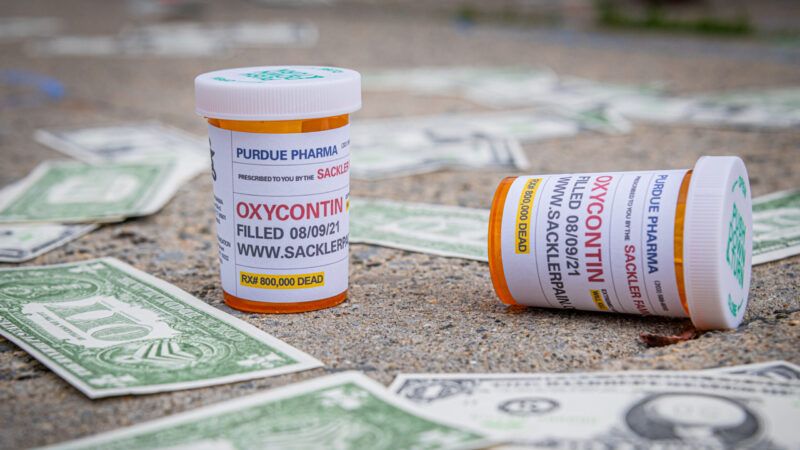
Opioid manufacturers and distributors are now forced to confront the consequences of the global opioid epidemic, as recent settlements have required them to pay out over $50 billion to state and local governments across the United States. Ohio, one of the more severely impacted states with one of the highest overdose rates, is being given $2 billion over the next 18 years. Ranked 8th in Ohio for all drug-overdose related deaths in 2020, Butler County is at the forefront of this issue, and residents continue to be affected. The impact of the opioid epidemic is felt by families, teachers, mentors, not the state government or representatives, so where is the money going?
The funds are divided into three different categories: 30% goes directly into Ohio counties, 15% goes to the Attorney General, and 55% of the funds will be distributed based on the decisions of a private, non-profit foundation known as the OneOhio Recovery Foundation. The foundation was established in 2021 by the direction of Ohio’s state and local leaders, including Governor Mike DeWine, after the initial settlement was made. Underneath the state board are 19 regional boards, who are primarily responsible for deciding how the funds are spent within those regions.
To gain some perspective on the situation from a more localized viewpoint, I had the pleasure of speaking with Dr. Scott Rasmus, the Executive Director of Butler County’s Mental Health and Addiction Recovery Services Board. Rasmus is directly involved with the opioid settlement funds, as he is the chair of the local Butler County OneOhio Settlement Governance Board and a committee member for OneOhio Settlement Funds for the Region 14 Board.
E. Moro: What is your role within both of the opioid settlement committees?
S. Rasmus: “I am a chair for the OneOhio Settlement Butler County Local Governance Board [they receive a portion of the 30% that is directly allocated to Ohio counties]. And then there is the Region 14 OneOhio Settlement Board [they receive a portion of the 55%], which I am a committee chair. Both boards receive an amount of money related to the opioid settlement funds, but they’re separate.”
E. Moro: Could you provide a more in-depth breakdown of how all the opioid funds are distributed in Ohio?
S. Rasmus: “There’s the Ohio opioid settlement funds, which are 100% of the funds that Ohio gets. 15% of that money goes to the attorney general in Ohio, and they address legal issues related to the opioid settlement funds.
55% of the money goes to the [OneOhio Recovery Foundation] regional boards. There are 19 regional boards in Ohio and our board is region 14. Region 14 includes 7 counties: Butler, Warren, Clinton, Clark Green, Madison, and Claremont. So Butler in that group is 1 of 7 counties, and that group has a governing board, an executive board, and committees that go along with the settlement board. That group is trying to develop what the protocol will be in deciding where and how the money is distributed amongst the 7 counties.
Then there is the 30%, the final piece, which goes directly into Ohio counties. That’s the group [Butler County OneOhio Settlement Governance Board] I am the chair of.”
E. Moro: How much money have Region 14 and Butler County received from the opioid settlement funds?
S. Rasmus: “Right now, there is just over 7 million in the Region 14 bank. The entire amount will be dispersed throughout the next 18 years [however]. Some of the settlements are one amount and done, some of them over 2-3 years, some over 9 years, and some of them go over 18 years in the way they are allocated.
Butler County has 1.3 million in the bank as of now. And like the regional funds, they will be fully dispersed over the course of 18 years, but most of the money is front-loaded and the payments decrease over time.”
E. Moro: Can you explain the relationship between the OneOhio State Board vs. the regional board?
S. Rasmus: “The OneOhio State Board has volunteer representatives from all regions as well as directly hired staff. For example, a few months ago they hired a permanent Executive Director Ms. Alisha Nelson, and her job is to oversee the funds and make sure they are allocated properly and structures are in place to streamline and insure the reliability of the process. They’re more of an oversight group. I think they’ve got a group of experts that will evaluate these proposals that have been identified through the regions before that money is allocated through that foundation to each region.
[The Region 14 Board] is trying to develop what the protocol will be in deciding where the money goes amongst the seven counties, what the request for proposal (RFP) process will look like, what kind of protocols and structures need to be in place, and ethical and legal considerations for the group. All of that is currently being developed. And that region sits under the OneOhio Foundation [the state board].”
E. Moro: Are there any specific transparency requirements that you have to follow or information you have to disclose about decisions being made/how the funds are allocated?
S. Rasmus: “All local, regional, and state foundation meetings are open to the public. Anyone can request information to attend meetings. I can think in both cases, the Region 14 Board and the local Butler County Board have had local citizens sit in on those meetings and they have shared their thoughts or requested information.”
E. Moro: What is the current status of these funds? Have any proposals been submitted regarding how to allocate the funds?
S. Rasmus: “Both in the region and in the county, there have been no proposals submitted to them yet. The proposal process is still being developed in both cases, but the notion is to publicize it either across the county or across the region. We’re open to any organizations that want to address the fallout from the opioid epidemic.”
E. Moro: What are the responsibilities of the local Butler County opioid committee?
S. Rasmus: “This committee [Butler County OneOhio Settlement Governance Board] that I lead and chair locally is creating suggested funding levels, a request for proposal process, recommendations on the size of those proposals, how the money will be allocated and over what period of time. We also discuss what’s going on at the regional level and state level, and how to best address it from a Butler County perspective. In the meantime, communicating to the public as well as Butler County Commissioners on what we’re doing. I don’t make the decisions, I set the agenda, but the group makes the decisions. The county commissioners have the ultimate decision on the local funds and have significant input into the regional funds.”
E. Moro: Have there been any proposed initiatives that the funds may be used for?
S. Rasmus: “There is a behavioral health crisis stabilization unit we are looking to implement in Butler County. It is slated to address significant behavioral health issues 24/7/365, including mental health and addiction presentations. The notion here is, it’s an assessment triage and referral unit that aims to get people early on in the mental health and addiction process so that they can get into recovery or have chances of recovery before it gets to a point where someone’s life is in danger because they’re using opioids or fentanyl or are experience psychosis. The unit will be open to the public 24/7, 365 days a year. The goal is to have it centrally located in the county so it’s not a far drive or commute, and the board hopes to provide subsidies for those who are lower income or may not be able to access these services as easily.
History has shown, for both mental health and addiction issues, it’s always better to get to a client early-on; prevention is key, as we are able to better prevent overdoses. It’s also important to educate individuals on the significant risks of drug misuse and unmanaged mental illness, and make people more aware of the consequences of both.”
My discussion with Dr. Rasmus was enlightening, as it emphasized the critical (and complicated) role that these settlement funds can play in addressing the detrimental consequences of the opioid epidemic. The proposed funds have the potential to act as a catalyst for meaningful change, providing the much-needed support to communities who are dealing with the lasting impacts of opioid/drug addiction.
If you have an emergency, please contact the Butler County Crisis Hotline at 1-844-427-4747 or call 911.
 miamipoliticalreview.org
Leave a comment