
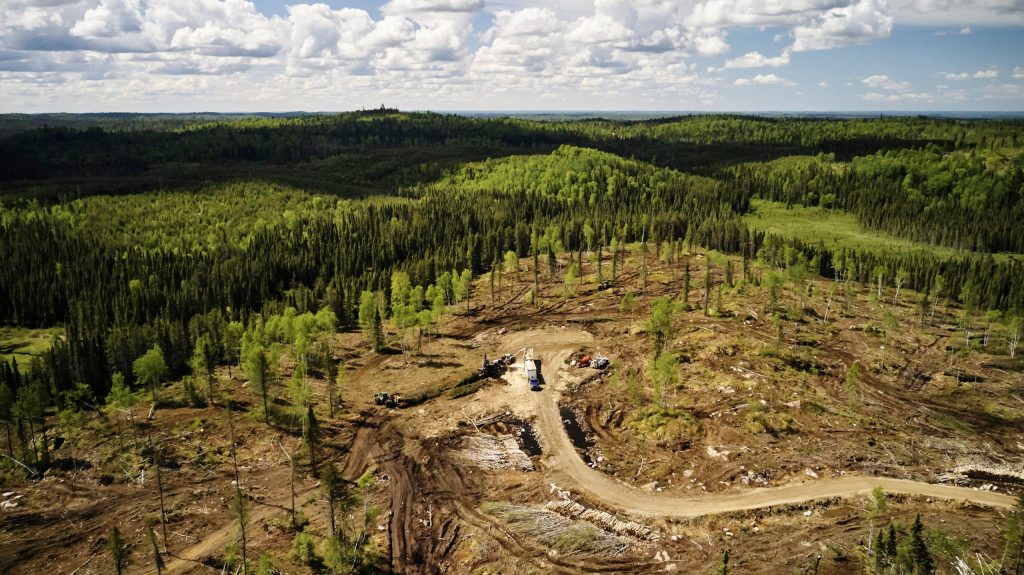
(River Jordan for NRDC)
Between 2020 and 2025, Cincinnati-based consumer goods company Proctor & Gamble has promised to support the planting of 1 million trees to “protect and enhance the forests we all depend on.”
Simultaneously Proctor & Gamble cuts down primary forests at a rate of 1 million acres per year for the production of their paper products, mainly Charmin toilet paper. And 1 million acres of forest, on average, hosts 50 million trees.
Deforestation exacerbates climate change, yet it can be difficult to make the scientific connection to a warming planet. I spoke with Jennifer Skene and Shelley Vinyard, two professionals at the Natural Resources Defense Council on what primary forests are, Proctor & Gamble’s role in destroying them, and what students, specifically at Miami University, should know about the company’s actions, and lack thereof.
The Natural Resources Defense Council (NRDC) is an environmental advocacy group committed to protecting the environment through legal action. They’ve fought for major victories including the passing of the Clean Water Act in the 1970s, helping heal the ozone layer in the 1980s, and more recently, securing Flint, Michigan residents with lead pipe replacements. They employ scientists, lawyers and environmental specialists to confront the climate crisis with a fact-based, and passionate stance to protect the environment and vulnerable communities within.
The NRDC has turned its attention to the degradation of Canada’s Boreal, a forest rich in natural resources stretching across the entire North American continent. Shelley Vinyard, the Boreal Corporate Campaign Director for NRDC, works to establish protections for Canada’s boreal forest alongside Jennifer Skene, Climate Solutions Policy Manager. They’ve both been dedicating their recent careers to protecting the Boreal forest, specifically from corporations and governments’ hands in deforestation.
Primary forests, biodiversity, and carbon storage.
“Primary forests, they’re really irreplaceable on any meaningful human timescale and have unique qualities that make them essential for both the climate and for biodiversity. Primary forests store between 30 to 50% more carbon in their vegetation and soils than previously logged forests,” Skene began when asked to explain what primary forests are.
As a refresher from 10th grade biology, biodiversity is every living thing within a given area, all being essential to generally support life on earth. Processes from all types of life, including humans, depend on a diverse range of species, interactions, microorganisms – essentially every living thing in an area. Carbon storage in this conversation is the natural harvesting of carbon dioxide by trees. Living trees need carbon to survive, and naturally absorb CO2 from the atmosphere. And to connect it to a warming atmosphere, carbon dioxide is the main cause of human-induced climate change. Therefore, trees, specifically in primary forests are vital in harvesting the harmful greenhouse gas from the atmosphere.
“So when you hear things like, oh we’ll cut down this forest, but will be replanting, well you can replant trees, but you can’t simply replant a primary forest,” noted Skene, “And of course, all of these forests have very unique values as well for the indigenous peoples who live on and depend on them for many of those same reasons, in terms of their subsistence value and the ecosystem services that they provide.”
The effects of primary forest degradation impact more than just biodiversity and carbon storage; indigenous communities depend on these forests for their survival and traditions. The NRDC is not only motivated by protecting forests for their biological benefits, but for their importance to indigenous and local populations. Skene’s policy work is dedicated to defending native groups who don’t have the resources to advocate for themselves on an international scale.
Harmful corporate practices.
NRDC is tackling the issue of boreal degradation through a corporate campaign launched a little over five years ago, which Vinyard manages. The corporate campaign targets corporations participating in industrial logging, mainly for products such as toilet paper, paper towels, facial tissues and other wood products. Boreal wood is in a number of products at common stores and corporations, such as lumber sold at Home Depot or Lowe’s, tissue from Kimberly Clark or Georgia Pacific, even Kirkland’s toilet paper from Costco. Vinyard shared even major publishers use boreal tree fiber to make their books.
The NRDC’s campaign against these corporations is proving to be successful over the past five years, and that they’re seeing a quantifiable change in consumer behavior and demands, as well as changes on the retail side.
“Store brands like Target launched its own sustainably made tissues line and sustainable product line a few years ago, and the grocery store HEB, which is really big in Texas,” said Vinyard.
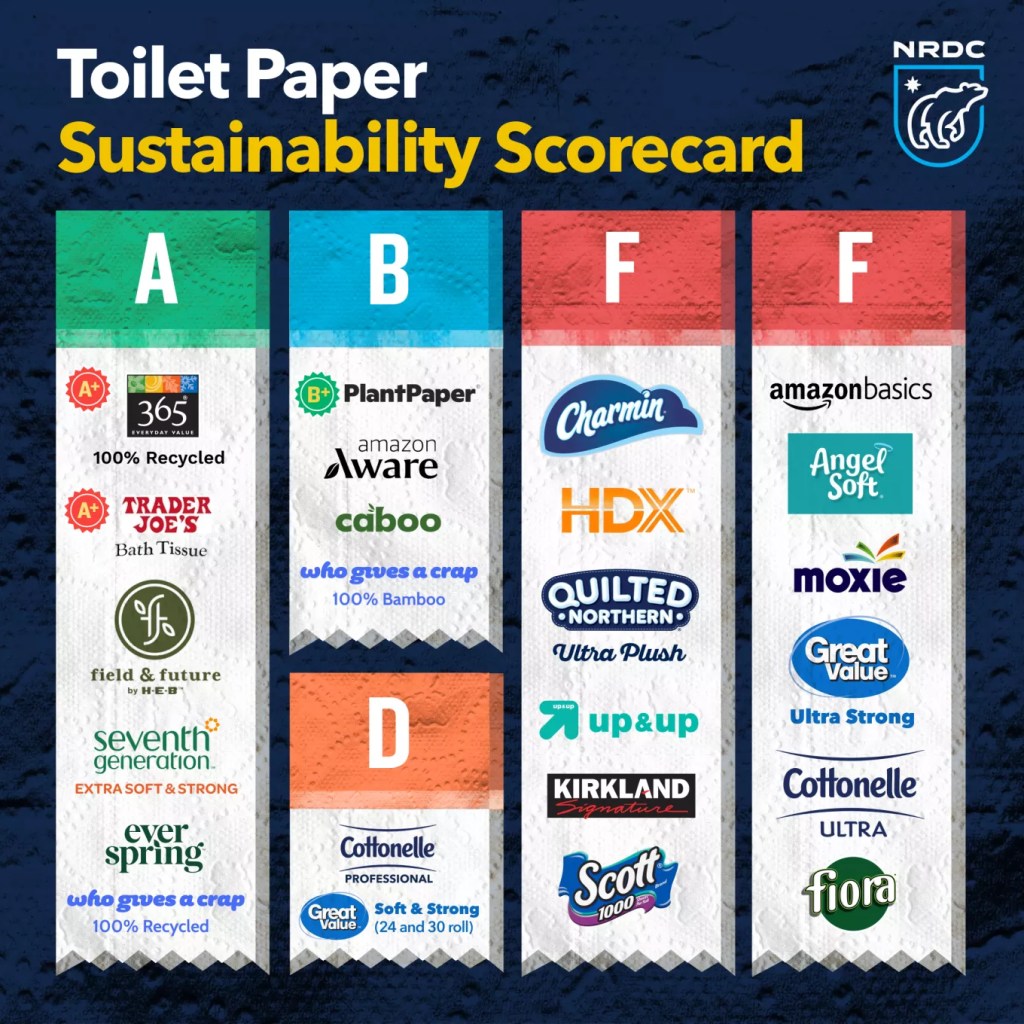
Each year the campaign releases a tissue sustainability scorecard, and consistently at the bottom are the products of Proctor & Gamble, who have failed to respond to consumer pressure, NRDC’s campaign, or to the general growing warnings of climate change.
“We haven’t cracked the nut of Proctor and Gamble yet, who still, every single product that they offer to consumers that’s widely available, is made using boreal fiber and 100% tree fiber,” Vineyard shares. “They’re really out of step with what your average person wants and thinks about the products that they purchase, because I think most people would say, no amount of softness is worth destroying our future.”
When addressing their use of tree pulp in paper products, Proctor & Gamble has no plans to adjust to recycled or certified bamboo products. They’ve committed to using 100% recycled packaging by 2030, yet no timeline to move away from virgin tree pulp from the Boreal.
“What we want P&G to do is quite simple, we want P&G to stop fueling forest degradation through its sourcing, and we want to see them have a credible time bound plan to eliminate forest degradation from its supply chains… and we’ve yet to see that this most recent policy that they’ve released doesn’t even mention forest degradation at all,” stated Skene. “They have continued to source from threatened species habitat, they’ve continued to source from primary forests, and they haven’t made a dent of progress in terms of actually reducing the impact that they’re having on primary forests in the boreal”
Consumer response and student action.
If the company won’t change its actions, the consumer can, Skene and Vinyard believe. The two professionals back the concept of ‘voting with your dollars’: the theoretical impact on the producer if consumers change their purchasing behavior.
“As a consumer, your dollars have power, and you’re sending a signal to the market. The more you talk about that decision, the more you’re getting other people to do the same, and then we send that signal to the market, they pay attention,” Vineyard emphasized.
This catalyst from consumer behavior is what the pair attributed earlier to the growth in sustainable brands over the past five years. If economically viable, students have the power to make simple lifestyle changes and subsequently send a message to large producers. Yet, sometimes when it comes to sustainable shopping, the plethora of licenses and claims to sustainability can get confusing, as greenwashing is present on almost every label.
“What I encourage people to do when it comes to tissue specifically, they can look for products that are made using 100% recycled content, or bamboo that is certified through the Forest Stewardship Council,” Skene recommends. “We want to encourage a world where we have circular solutions.”
As Miami University students, we’re attached to this issue more than the average college student. Proctor & Gamble is headquartered in Cincinnati, and according to LinkedIn, the company employs at least 538 Miami University alumni. P&G has a tight connection with the Farmer School of Business, where they host a plethora of case competitions, sponsor events, and frequent the career fair.
Rather than feeling badly about this connection between Miami and P&G, students can use it to their advantage.
Skene recommends for students, “If you’re at a career fair and P&G is there, ask them about this [issue], if you’re in a class where P&G representatives come to speak, ask them about their sustainable sourcing and what their plans are to improve their supply chain. If a P&G recruiter reaches out to you, tell them your concerns. They need to hear from everyone, and I think that if they do that it will hopefully give them a little bit more pause and move them in the right direction.”
You can learn more about corporate wood sourcing through NRDC’s analysis, and purchasing environmentally friendly tissues with NRDC’s Issue With the Tissue report.
 miamipoliticalreview.org
Leave a comment